

360 Visibility Technology Trends for Cyclists

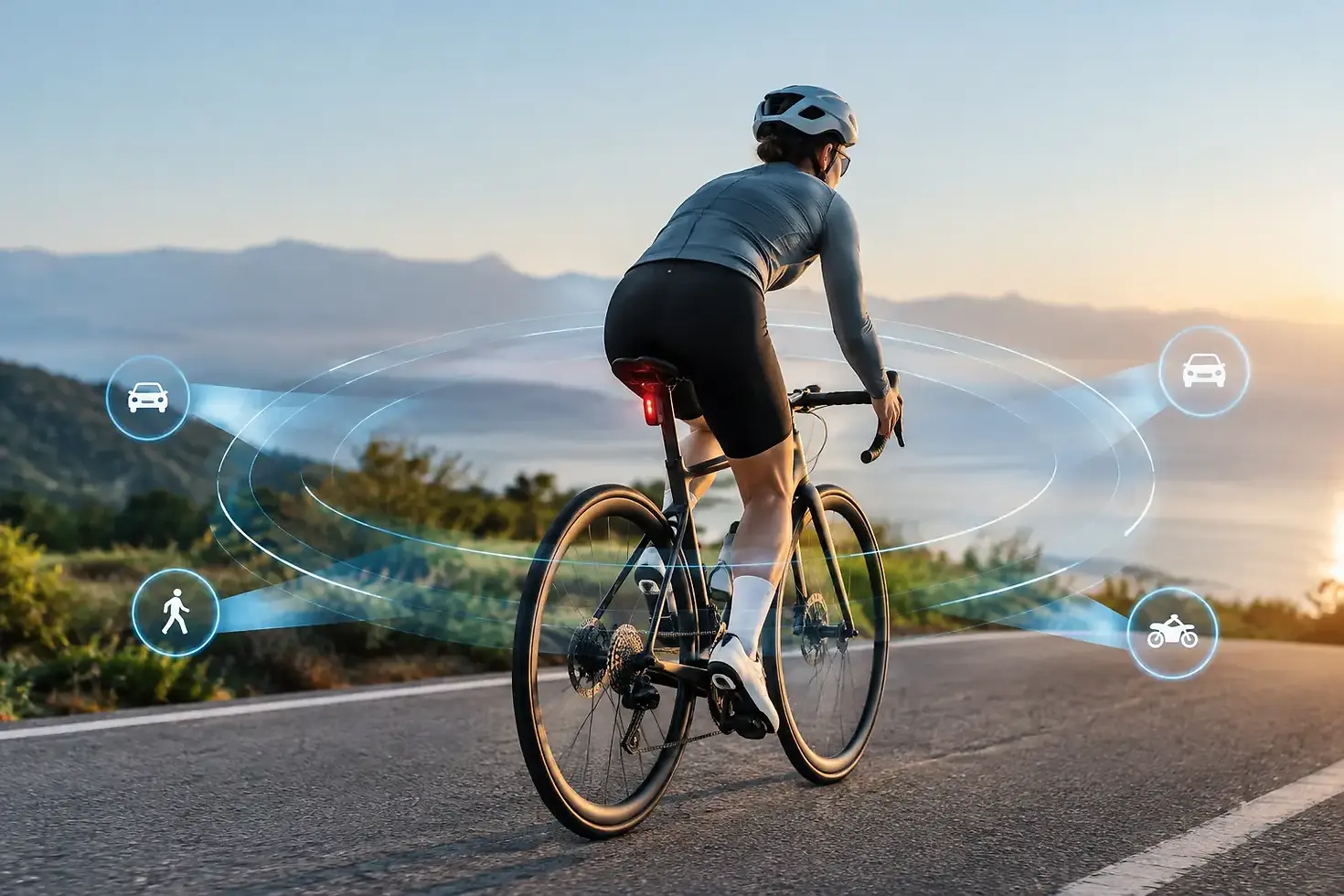
A tiny red dot under the saddle may satisfy the bare minimum, but it does not solve the visibility problem riders face at roundabouts, intersections and driveways. The biggest 360 visibility technology trends are moving cycling safety beyond rear-facing brightness towards wider, more recognisable illumination that works when traffic approaches from the side.
For Australian commuters and road riders, that shift matters. Many dangerous moments happen before a driver is directly behind you: a car turns across a bike lane, noses out from a side street or changes lanes in fading light. Being seen from one narrow angle is not the same as being seen when you need it most.
360 visibility technology trends are widening the safety zone
For years, bike lighting followed a simple formula: white at the front, red at the rear. It is still essential, but it is no longer enough for riders sharing busy roads. Modern visibility technology is being designed around the way people actually move through traffic - from multiple directions, at changing speeds and in messy, low-contrast conditions.
The strongest trend is a move from point-source lights to larger illuminated surfaces. A conventional tail-light concentrates its output into a small lens. That can look bright when viewed straight on, yet become far less noticeable as the viewing angle changes. A broader light surface gives drivers more visual information to detect and recognise.
This is why wraparound, fibre-optic and flexible LED designs are gaining attention. They create a longer visible signature rather than a single pinprick of light. The result is not just more light. It is a clearer signal that a rider is present, moving and deserving of space.
Side visibility is becoming a primary feature
Side visibility used to be treated as a bonus. Now it is central to better safety design. At intersections, a driver may only have a brief side-on view of a cyclist before making a decision. A light that is strong only from behind leaves a serious gap at exactly the wrong moment.
The best new systems address this with light that can be seen across a wide viewing arc. Some use side lenses, while others use a flexible illuminated body that naturally throws light around the rider or bike. The trade-off is worth understanding: a light designed for broad coverage may not throw one ultra-intense beam as far forward or rearward as a narrowly focused unit. For rear visibility, though, wide-angle recognition is often the smarter priority.
Look for a rear light that remains obvious when you stand to the side of the bike, not just directly behind it. If its brightness disappears when you move a few steps off centre, it is not giving you meaningful 360-degree protection.
Bigger illuminated surfaces beat tiny bright dots
Brightness figures attract attention because they are easy to compare. But lumens alone do not tell the whole story. A small, high-output light can still be hard to identify in rain, visual clutter or the glare of traffic. Surface area matters because it increases the chance of being noticed quickly.
Think about a road worker's vest versus a small reflective badge. Both may catch light, but one creates a much stronger visual presence. The same principle applies to bike lighting. A larger illuminated area is easier for a motorist to pick out among brake lights, shopfronts, street lamps and reflective signs.
Pattern and movement also help. Pulse modes can draw attention in daytime, while a steady mode may be easier on the eyes in dark group rides. There is no single perfect setting for every ride. The goal is to create a light signature that is conspicuous without becoming distracting or difficult for other road users to judge.
Daytime running lights are no longer just for premium riders
Another clear technology trend is the normalisation of daytime lighting. Strong sun does not guarantee good visibility. Low-angle glare, tree cover, rain clouds and visual clutter can hide a rider surprisingly well, particularly on a commute when drivers are scanning for cars rather than bikes.
A purpose-built daytime flash mode uses a pattern and output that remain noticeable in bright conditions. It does use more battery than a low-output night mode, so rechargeability matters. The practical answer is simple: choose a unit that makes daily charging painless, then build it into your routine alongside checking tyre pressure or packing your work gear.
USB-rechargeable lighting has made this far easier than the disposable battery lights many riders grew up with. There is less waste, fewer flat batteries discovered at the front door, and a better chance your light is ready for the return trip home.
Flexible mounting is a real-world safety advantage
A brilliant light is wasted if it is hidden by a jacket, mudguard, rack bag or the angle of a seatpost. That is why flexible mounting is becoming a major part of visibility technology, especially for commuters and gravel riders whose setup changes from day to day.
The most useful lights can move between the bike, backpack, helmet or clothing without fuss. Mounting a light higher on your body can improve its chance of being seen over parked cars and other traffic. Mounting it on luggage can be ideal for a practical commute. On a wet or rough ride, a secure attachment matters just as much as output.
This flexibility is especially valuable for riders who use more than one bike. A light that is quick to shift from a road bike to a commuter, or from a bike to a running vest, is more likely to be used. Safety gear only protects you when it is actually with you.
Fibre Flare UP reflects this direction with a flexible fibre-optic LED hybrid design that can be mounted across bikes, bags and clothing, creating high-impact wraparound visibility rather than another standard directional tail-light.
Smart features should remove friction, not add it
Connected lighting, automatic brake sensing and ambient-light sensors are appearing in more cycling products. These features can be useful, but they should earn their place. A brake light effect may help alert a following driver, while automatic activation can prevent a forgotten light on a dark morning.
But more electronics also mean more setup, more charging demands and more potential failure points. For many riders, a simple weather-resistant light with obvious controls, dependable runtime and a clear battery indicator is the better safety choice. Technology should reduce the number of decisions you make before riding, not create another menu to manage.
Weather resistance is particularly relevant in Australia, where a ride can begin in dry heat and finish in a sudden downpour. A visibility light needs to cope with rain, road spray and the occasional rough handling in a crowded bike cage. Check that charging ports are protected and that the mounting system does not loosen after repeated use.
Visibility is becoming part of the whole rider profile
The next step is not one magic gadget. It is a layered visibility approach: an effective front light, a high-impact rear light, reflective details and positioning that gives drivers time to see you. Technology is improving each layer, but it cannot replace road awareness, predictable riding or keeping out of blind spots where possible.
For urban riders, the most useful upgrade may be better side and rear coverage. For long-distance road cyclists, runtime and all-weather durability can take priority. Gravel riders may value a light that stays secure over vibration and can be moved onto a backpack. The right choice depends on where, when and how you ride.
Do not wait for the next close call to rethink your visibility. Before your next dawn commute or late ride home, stand back from your bike, look at it from every angle, and ask one direct question: would a driver see me early enough to make the safe choice?


Comments