

What Is Side Visibility Cycling and Why It Matters
- Xavier

- Jul 16
- 6 min read
A driver waiting to turn at an intersection may not be looking directly behind you. They are scanning across lanes, mirrors, parked cars, pedestrians and gaps in traffic. If your only light points backwards, there is a moment when you can be close, moving and still hard to pick out. That is the problem side visibility cycling is built to solve.
What is side visibility cycling?
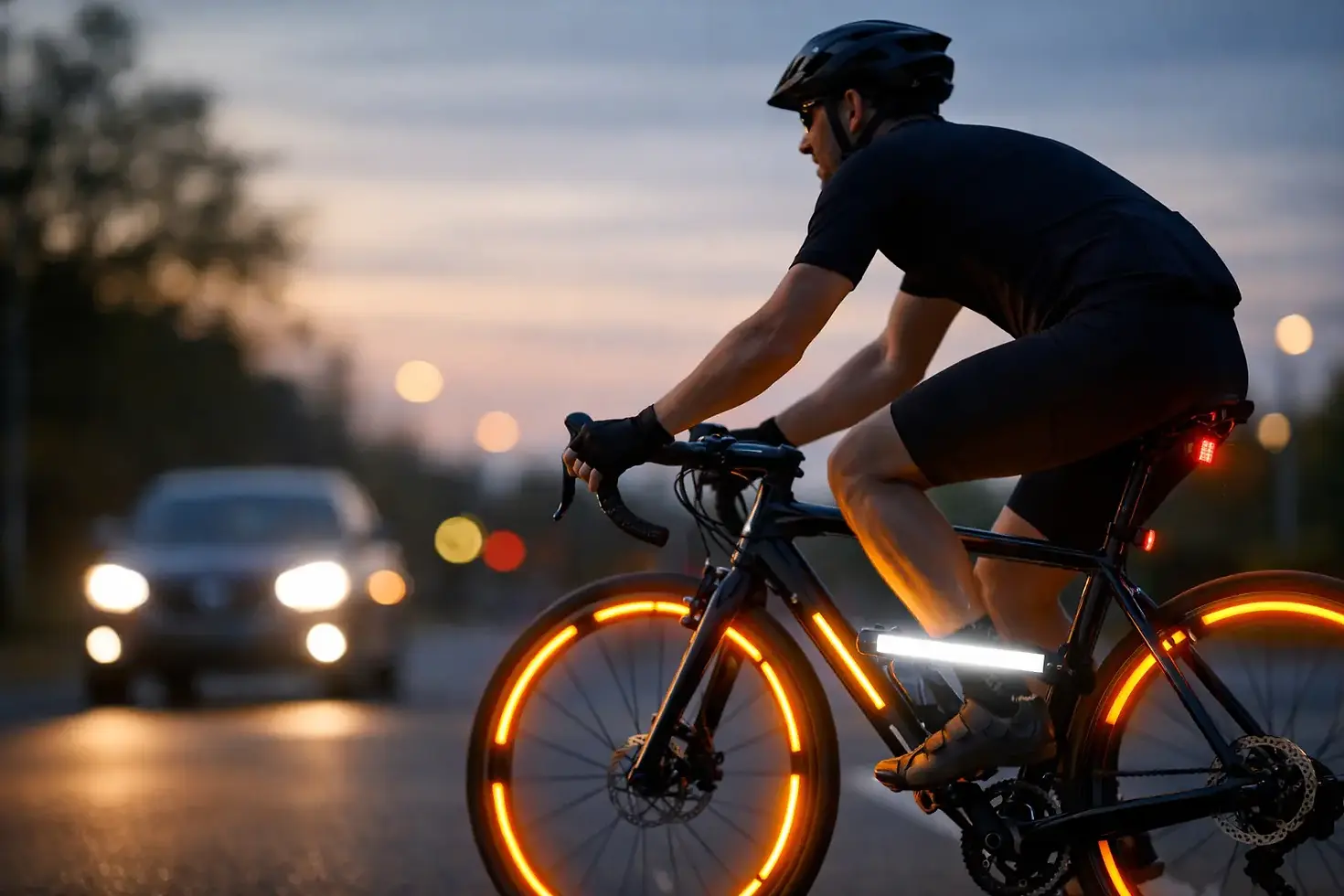
Side visibility cycling means making yourself visible to people approaching or crossing your path from either side, not just to traffic directly in front of or behind you. It is about how well drivers, riders and pedestrians can detect you at angles - especially at intersections, roundabouts, driveways, car parks and lane changes.
A conventional rear bike light does one job: it sends a concentrated beam backwards. That is useful, but it leaves a visibility gap. From the side, a small directional light can look faint, disappear completely, or be blocked by your body, a pannier, mudguard or the angle of the bike.
Side visibility is different. It creates a broader visual signal that says, clearly and early, “a cyclist is here”. In low light, that extra recognition time matters. Being noticed before a driver begins a turn is far better than being noticed when the gap has already closed.
Why side-on visibility matters on Australian roads
Most riders understand the need for a rear light after dark. The more common risk is assuming that being visible from behind means being visible everywhere. It does not.
Think about a weekday ride home. You are travelling along a busy arterial road as a car waits in a side street. Or you are crossing a roundabout at dusk while a ute enters from your left. Or you are moving through a shopping precinct where vehicles reverse from angled parking. These are side-approach situations. Your visibility needs to work across the driver’s field of view, not only in their rear-view mirror.
The challenge becomes sharper in Australia’s changing light. A bright afternoon can slide into glare, shadows and dusk quickly. Rain makes reflective surfaces shine, windscreens collect reflections, and dark clothing blends into the background. Even a rider who is plainly visible in one direction can be difficult to identify from another.
This is not about blaming drivers or expecting cyclists to compensate for every poor decision on the road. It is about giving yourself a stronger margin. Side visibility helps other road users recognise your position sooner, which gives them more time to slow, wait or change course.
Rear visibility and side visibility are not the same
Rear visibility tells traffic following you that you are ahead. Side visibility tells cross-traffic that you exist and are moving through their path. A safer setup does both.
A traditional flashing rear light can be excellent when viewed head-on from behind. Its limitation is surface area and direction. Small lights are designed to be compact, so they are often most effective within a narrow cone. Tilt the bike 90 degrees and much of that signal is lost.
A larger illuminated area can be recognised more quickly at an angle because there is simply more light to see. A wraparound or flexible light format also helps maintain a visible profile from multiple directions. The goal is not to turn your bike into a Christmas tree. The goal is to create a clear, unmissable outline that works when traffic is not directly behind you.
Reflectors still have a role, but they are passive. They need another vehicle’s headlights to strike them at the right angle. Active lighting produces its own light, so it remains useful where illumination is weak, uneven or coming from the wrong direction.
Where cyclists need side visibility most
Side visibility is valuable on every ride, but some environments make it non-negotiable.
Intersections and roundabouts
At intersections, drivers are making multiple decisions at once. They may be judging gaps, watching oncoming cars and checking for pedestrians. A cyclist approaching from the side can be overlooked, particularly in the first and last light of the day. A broad, highly visible signal helps separate you from the visual clutter.
Roundabouts demand the same attention. Vehicles enter from different angles and drivers often focus on traffic already circulating. Your rear light may not face the driver who needs to see you before they pull out.
Driveways, car parks and side streets
These places produce short, unpredictable movements. A vehicle can roll forward from behind a hedge, reverse from a driveway, or emerge from a service lane with limited sightlines. At low speed, people may rely on a quick glance rather than a thorough scan. Make that glance count.
Group rides and shared paths
Side visibility is not only for cars. On a shared path, other cyclists and pedestrians need to judge where you are and how fast you are travelling. On group rides, a visible side profile helps riders alongside you maintain space and spot your movement in dim conditions.
How to build a stronger visibility setup
Start with the essentials: a reliable white front light and a red rear light, used whenever conditions reduce contrast or visibility. For many commuters, that means running lights before sunset, through dawn, in rain, and under heavy cloud - not waiting for full darkness.
Then assess the bike from the side. Stand a few metres away and ask a practical question: if a driver were looking across a lane, what would they actually see? A tiny point of red light might be visible. A wide illuminated surface, reflective tyre sidewalls, pedal reflectors or strategically placed reflective details give the eye more information to detect.
Mounting position matters as much as the light itself. A rear light hidden beneath a saddle bag or covered by a jacket is compromised before you leave the house. Put lights where they are unobstructed and high enough to be seen over common roadside clutter. If you carry a backpack or change bikes regularly, flexible mounting options can make it easier to keep your visibility consistent.
Use flash modes thoughtfully. A flash can attract attention in daylight and busy urban conditions, while a steady mode can make it easier for others to judge your position and distance at night. There is no one setting for every road and every weather condition. Check the mode, charge and mounting before each ride rather than treating a light as fit-and-forget gear.
Choose visibility gear for the way you ride
A fast road rider may prioritise a light that remains obvious at long distance and in bright daylight. A commuter may need quick mounting, weather resistance and enough run time to handle the ride home after a long day. Gravel riders need gear that stays secure over vibration and remains visible when dust, mud and tree cover reduce contrast.
For riders who want a conspicuous rear and side signal without adding a collection of small lights, Fibre Flare UP uses a flexible fibre-optic LED format to provide 360-degree illumination, with a large illuminated surface that can be mounted on a bike, bag or clothing. The point is practical: visibility should move with your real-world riding setup, not force you to compromise because you brought a different bag or bike.
Visibility is a system, not a single purchase
Lighting is powerful, but it cannot do all the work. Your road position, speed, clothing and behaviour affect whether others can read your intentions. Avoid sitting in blind spots where possible. Signal early. At intersections, make eye contact when you can, but never rely on it as proof that a driver has seen you. Give turning vehicles room and assume a gap can close.
Clothing can support active lighting, particularly with reflective elements on moving parts such as ankles or shoes. Movement catches attention. Still, reflective clothing should complement lights rather than replace them. It is much less useful without a light source aimed at it.
The trade-off is simple. More visibility equipment can mean more charging, more mounting and more pre-ride checks. The answer is not to load your bike with complicated gear you will stop using. Choose a setup that is easy to charge, quick to fit and tough enough for regular use. Consistency beats a perfect setup left in a drawer.
Before your next dawn, dusk or night ride, look at your bike from the side. If the answer is mostly darkness and a tiny dot, you have found an opportunity to ride with a bigger safety margin. Be seen when you need it most.


Comments