


Bike Taillight Basics That Actually Keep You Seen
- Xavier

- Jul 2
- 6 min read
The moment a driver approaches from an angle at a roundabout, driveway or side street, a basic bike taillight can stop doing its job. You might still be visible from directly behind, but that is not where many close calls happen. For riders in Australian traffic, being seen from the rear is only half the story. Side visibility matters just as much, and often more, when light is low and decisions are made fast.
That is where a lot of riders get caught out. They buy a taillight based on brightness claims alone, clip it to the seatpost, and assume they are covered. But a light that looks powerful in a product photo is not always the one that gives you the best chance of being noticed on the road. If your goal is simple - get seen early, clearly and from more angles - then the shape, spread and mounting position of your rear light matter every bit as much as raw output.
What a bike taillight should really do
A good bike taillight is not just there to tick a legal or practical box. Its job is to create recognition. A driver should not need extra seconds to work out whether they are looking at a cyclist, where you are moving, or how close you are. The stronger the visual signal, the earlier they can respond.
That means visibility at distance is important, but distance on its own is not enough. A tiny pin-point light may be bright in a straight line yet still disappear when viewed from the side. In real riding, that is a serious weakness. Urban riders cross intersections. Commuters pass parked cars and turning vehicles. Road cyclists deal with changing light, tree cover and fast-closing traffic. Gravel riders often move between open roads and shaded stretches where contrast drops quickly. In all of those moments, a narrow beam can leave dangerous blind zones.
A stronger design creates a larger illuminated area and pushes light out in more directions. That is how you move from a basic rear marker to something that actively improves your presence on the road.
Why side visibility changes the game for a bike taillight
Most conventional rear lights are directional. They are designed to fire light backwards in a tight pattern, which sounds sensible until you think about how traffic actually moves. Cars rarely approach from one neat line behind you. They merge, overtake, turn, angle in from side streets and cut through car parks. If your light only performs from one position, it leaves gaps exactly where you need cover.
This is the big difference between a standard rear bike light and a visibility-first design. A wider lighting surface, especially one that can be seen around the sides, gives drivers and other road users more chances to notice you earlier. That extra fraction of a second matters. It can be the difference between a clean pass and a late swerve.
For Australian riders, this is especially relevant in mixed conditions. Dawn commutes, winter afternoons, wet roads and patchy suburban lighting all reduce contrast. Add a dark jersey or a black backpack and your profile can disappear quickly. A bike taillight with broad, wraparound visibility helps cut through that visual clutter.
Brightness matters, but not in the way most people think
There is a reason many riders chase the highest lumen number they can find. It feels like a shortcut to safety. More lumens must mean better visibility, right? Sometimes, yes. But not always.
Brightness needs context. A very bright, very small light can still be easy to miss if it is mounted low, blocked by a saddle bag, or invisible from the side. It can also become harsh or distracting in certain flashing modes, which may grab attention without clearly showing your position. Drivers need to identify you, not just notice a random strobe.
A better measure is usable visibility. Can the light be seen from a long distance? Can it be recognised from off-angle positions? Does it remain obvious when the bike leans, when you are out of the saddle, or when the road bends? Does the illuminated area stay clear against headlights, streetlights and wet bitumen? Those are the questions that actually matter.
The mounting position can make or break your visibility
Even an excellent bike taillight can underperform if it is mounted badly. Seatposts are common, but not always ideal. Small frame sizes, saddle bags, jackets and mudguards can all block part of the beam. On some bikes, the angle is also too low or too tucked in to create a strong visual profile.
That is why flexible mounting is more than a convenience feature. It is a safety feature. If a light can mount to the bike, bag or clothing, riders can position it where it is least obstructed and most visible. That matters for commuters carrying work gear, road riders with layered kit, and everyday riders who do not want to rebuild their setup every time they head out.
There is also a practical point here. The easier a light is to move, charge and remount, the more likely you are to use it every single ride. Safety gear only works when it is actually on you.
Battery life, charging and weather resistance are not minor details
A taillight that runs flat halfway through the week is not a serious safety solution. Neither is one that chews through disposable batteries or gives up in rain. Australian riders need gear that suits real use - early starts, surprise showers, long commutes and regular charging without fuss.
USB rechargeability has become the standard for good reason. It cuts out battery waste, reduces maintenance and makes it easier to keep the light ready. But battery life should still be judged honestly. Flash mode figures can sound impressive, yet your actual use may involve steady mode, colder conditions or longer rides. If you ride often, convenience matters as much as runtime.
Weather resistance is just as important. If your light cannot handle drizzle, road spray or the odd downpour, it is not built for daily riding. Reliable safety gear should not need perfect conditions.
What separates a serious safety light from a basic accessory
This is where many products part ways. Plenty of rear lights are good enough to say you have one. Far fewer are designed around how collisions actually happen.
A serious visibility light is built to be noticed from more directions, over more distance, with fewer blind spots. It should have a large illuminated surface area, not just a tiny bright point. It should suit different bikes and riders without awkward brackets or limited placement. It should be durable, rechargeable and weather resistant. And above all, it should make you feel more visible in the moments that count - roundabouts, side streets, dark bike paths, suburban rat-runs and busy evening traffic.
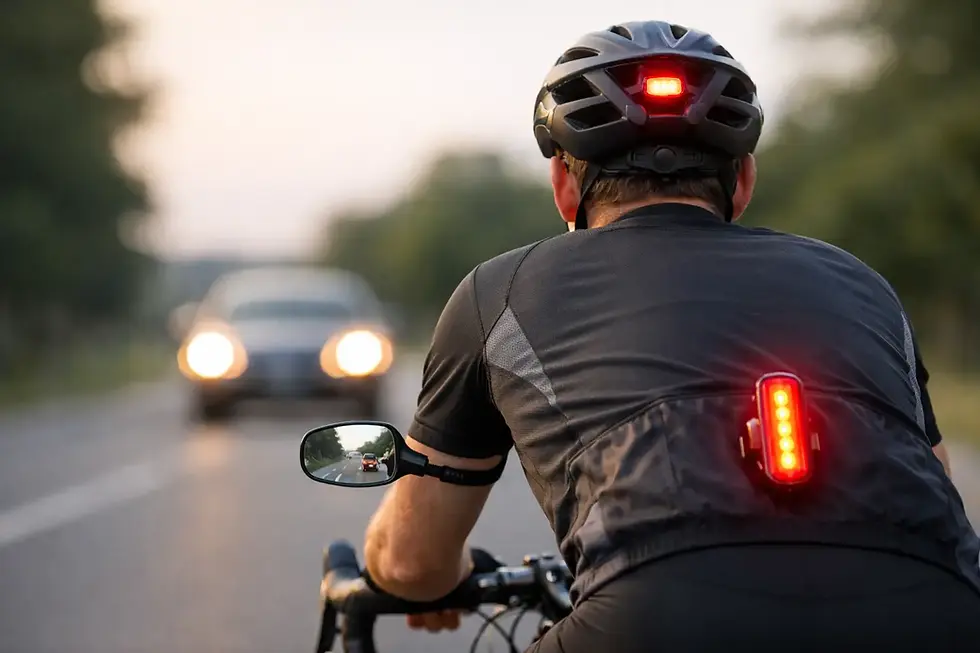
That is why innovative designs have started moving beyond the old directional format. Fibre-optic and hybrid lighting systems, for example, offer a broader visual signature than standard clip-on units. Instead of relying on a single rear-facing lens, they create a longer, more visible line of light that can be seen from multiple angles. For riders who want more than the bare minimum, that is a meaningful upgrade.
One example is Fibre Flare UP, which takes this approach seriously with 360-degree illumination, long-range visibility and flexible mounting. The point is not novelty. The point is solving a real safety gap that conventional taillights often leave exposed.
How to choose the right bike taillight for your riding
If you mostly ride on quiet paths in full daylight, your needs will differ from someone commuting through traffic before sunrise. It depends on where, when and how often you ride. But for most adults riding on Australian roads or shared spaces, the safer choice is the one that covers more scenarios, not fewer.
Look for a light that remains visible from the rear and the side. Prioritise a bigger lighting footprint over flashy specs that do not translate to real-world noticeability. Choose something rechargeable, weather resistant and easy to mount where it will not be blocked. If you ride in traffic, avoid treating side visibility as optional. It is one of the first things worth upgrading.
There is also value in choosing gear that feels dependable. When a product is clearly designed for safety rather than just price-point competition, it tends to show in the details - stronger mounts, better materials, more thoughtful light distribution and fewer compromises.
A bike taillight should do more than blink in the dark. It should help protect your space on the road, give others more time to react, and make you visible from the angles that matter most. Be seen when you need it most, not just when someone is directly behind you.


Comments